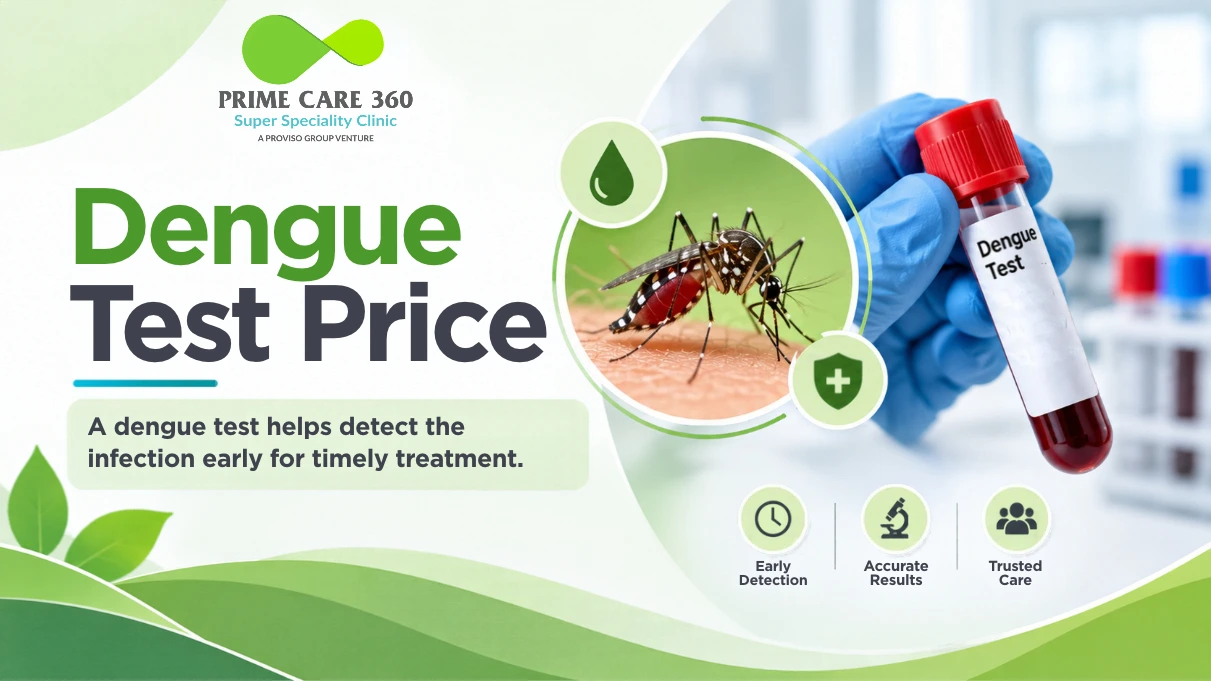
Dengue is a mosquito-borne viral infection that can cause high fever, headache, body pain, nausea, rash, and weakness. Because these symptoms can overlap with other infections, laboratory testing can help confirm whether dengue is responsible. The dengue test price depends on the type of test, laboratory, location, and whether a single test or a combination of tests is recommended.
Different dengue tests are useful at different stages of the illness. NS1 antigen testing and molecular tests such as RT-PCR are generally useful during the early phase, while IgM antibody testing becomes more useful as the illness progresses. The appropriate test should therefore be selected according to the number of days since symptoms began and the doctor’s clinical assessment.
A dengue test is a blood test used to look for evidence of dengue virus infection. Depending on the test, the laboratory may detect the virus itself, a viral protein called NS1, or antibodies produced by the immune system in response to infection.
Testing is particularly useful when symptoms suggest dengue because fever alone cannot reliably distinguish dengue from other infections such as chikungunya or other febrile illnesses. WHO recommends laboratory confirmation because symptoms can overlap with several other diseases.
An appropriate test can help confirm or support a dengue diagnosis and guide medical management. However, a test result should be interpreted together with symptoms, physical examination, illness duration, and other relevant findings.
If dengue is strongly suspected, medical care should not necessarily be delayed while waiting for test results. CDC guidance recommends appropriate clinical management when dengue is suspected.
Several laboratory methods can be used to diagnose dengue. The commonly discussed options include NS1 antigen testing, IgM antibody testing, and molecular testing such as RT-PCR. Each test detects a different marker of infection and has a different window during which it is most useful.
The choice depends largely on when the fever or other symptoms started. A doctor or laboratory professional can advise which test is appropriate based on the clinical situation.
The NS1 test detects a protein produced by the dengue virus. It is particularly useful during the early phase of illness and is recommended during the first seven days of symptoms. A positive NS1 result indicates dengue infection, while a negative result does not completely rule it out.
The IgM test detects antibodies produced by the immune system in response to dengue infection. IgM typically becomes detectable several days after symptoms begin and becomes particularly useful as the illness progresses.
A positive IgM result can indicate a recent dengue infection, although results need to be interpreted in the clinical context because antibody testing can sometimes have cross-reactivity with other flaviviruses.
RT-PCR is a molecular test that detects dengue virus genetic material. It can be useful during the early stage of illness, particularly within the first seven days. A positive molecular test confirms dengue virus infection.
There is no single fixed price for dengue testing across India. The amount can vary according to the type of test, laboratory, city, diagnostic facility, testing method, and whether additional tests are performed.
An NS1 or IgM test may have a different price from an RT-PCR test because the laboratory methods and processing requirements are different. A combination of tests may also increase the total laboratory expense.
When checking the price, it is useful to confirm exactly which dengue test is included rather than comparing only the advertised amount. A healthcare provider can also advise whether one test is sufficient or whether testing with more than one method is appropriate.
The cost of dengue testing depends on several practical factors. The most important is the test method because NS1 antigen, IgM antibody, and molecular testing have different laboratory procedures.
The location and type of diagnostic laboratory can also influence the price. Testing at a hospital, private diagnostic centre, or other laboratory may involve different charges. If a doctor recommends additional blood investigations to monitor the illness, the total diagnostic expense can also increase.
Different dengue tests require different laboratory techniques and resources. A basic antigen or antibody test may have a different price from molecular testing.
The most expensive test is not automatically the most appropriate one. Timing is important because the usefulness of a particular test changes during the course of infection.
Sometimes one test may not provide a complete answer, particularly when testing occurs very early in the illness. Depending on symptoms and timing, the doctor may recommend another test or a combination of tests.
This means the total amount paid for dengue testing can be different from the price of an individual test.
Diagnostic charges can vary between cities and laboratories. Testing facilities with different equipment, laboratory processes, and service models may quote different prices for the same broad type of test.
Before booking a test, check whether the quoted price includes sample collection, laboratory processing, and reporting charges.
The ideal timing depends on how long the symptoms have been present. During the first seven days, NS1 antigen testing or molecular testing can be useful for detecting acute infection. IgM may also be used in combination with an early-phase test.
After the first week, IgM antibody testing becomes increasingly important for detecting a recent infection. A negative result from an early test does not always rule out dengue, so repeat or additional testing may sometimes be recommended based on symptoms and timing.
During the early stage, the virus or viral components may be detectable in the blood. NS1 antigen testing and molecular testing can therefore be useful during this period.
If symptoms have only recently started, speak with a healthcare professional about the most suitable test rather than choosing a test based only on its price.
As the infection progresses, antibody testing becomes more useful. CDC guidance recommends IgM as the primary serological test after day seven when dengue is suspected.
The exact testing approach can vary according to symptoms, previous dengue exposure, local transmission, and available laboratory methods.
Dengue can cause sudden fever along with headache, pain behind the eyes, muscle or joint pain, nausea, vomiting, rash, and weakness. Symptoms can vary considerably between individuals.
A fever in a dengue-prone area does not automatically mean dengue, but testing may be appropriate when symptoms and exposure history raise suspicion. Medical evaluation is particularly important if symptoms are severe or worsening.
Severe abdominal pain, persistent vomiting, bleeding, extreme weakness, restlessness, breathing difficulty, or changes in alertness can be concerning symptoms. Anyone experiencing serious or rapidly worsening symptoms should seek prompt medical attention rather than relying only on a laboratory test.
A positive NS1 antigen or molecular test can provide evidence of current dengue infection. A positive IgM test can indicate a recent infection, although antibody results may require clinical interpretation because cross-reactivity can occur.
A negative result does not always rule out dengue, particularly when testing is performed very early. The timing of the sample is therefore an important part of interpreting the result.
Most dengue blood tests do not generally require fasting. However, if dengue testing is being performed along with other blood investigations, some of those tests may have separate preparation requirements.
It is best to follow the instructions provided by the laboratory or healthcare professional before giving the blood sample.
PrimeCare360 provides medical evaluation and diagnostic support for patients experiencing symptoms that may require investigation. Since fever and body pain can occur with several infections, appropriate clinical assessment can help determine which tests may be suitable.
The healthcare team can guide patients regarding the appropriate diagnostic evaluation, interpretation of results, and follow-up care based on individual symptoms. For more information about healthcare services, visit PrimeCare360.
The dengue test price depends on the test method, laboratory, location, and number of investigations required. NS1 antigen, IgM antibody, and RT-PCR tests are used at different stages of dengue infection, so selecting a test based only on cost may not provide the most useful result.
If you have symptoms that could indicate dengue, consult a healthcare professional about the appropriate test and timing. Early medical assessment is especially important when fever is accompanied by severe or worsening symptoms.
The price varies depending on whether the test is NS1, IgM, IgG, or RT-PCR, as well as the laboratory and location. The final cost may also change if multiple tests are required.
The appropriate test depends on the number of days since symptoms began. During the first seven days, NS1 antigen or molecular testing can be useful, while IgM becomes increasingly useful as the illness progresses.
NS1 test charges vary between laboratories and locations. The price should be checked with the specific diagnostic centre because there is no single nationwide fixed charge.
Dengue can sometimes be detected early, but the most appropriate test depends on the stage of illness. NS1 and molecular testing are useful during the early phase, while antibody levels may not yet be detectable.
Yes. Dengue diagnostic testing commonly uses a blood or serum sample, depending on the laboratory method and test requirements.
Not necessarily. A negative result can occur when testing is performed at a time when the selected marker is not yet detectable. Depending on the timing and clinical situation, additional or repeat testing may be recommended.

with 40+ expert doctors

Consultation, Diagnostics & Pharmacy in one place

Easily accessible for seniors and children

with modern technology
Your health is our priority! Whether you need an expert consultation, diagnostic services, or pharmacy support, our team is here to assist you. Contact us today to book an appointment or get answers to your health-related queries.