
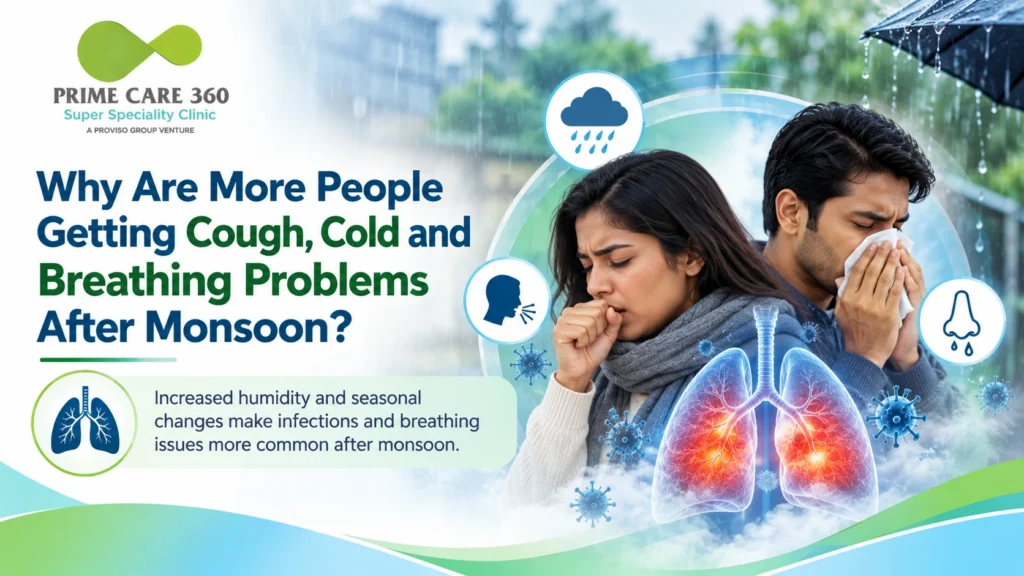
Why Are More People Getting Cough, Cold and Breathing Problems After Monsoon?
Blog Book An Appointment Why Are More People Getting Cough, Cold and Breathing Problems After Monsoon? As the monsoon season comes to an end, many people experience persistent coughing, colds, sneezing, throat irritation, or difficulty breathing. These problems may become more noticeable when the weather changes, humidity remains high, and indoor spaces stay damp. For some, the symptoms are mild and improve within a few days, while others may experience worsening allergies or respiratory infections. Why Are More People Getting Cough, Cold and Breathing Problems After Monsoon? The main reasons include changing temperatures, lingering moisture, increased exposure to mould and dust mites, and seasonal respiratory infections. Understanding these triggers can help you take suitable precautions and recognise when medical attention is necessary. What Causes Cough, Cold and Breathing Problems After Monsoon? The period after the monsoon can create conditions that affect respiratory health. Although the rain may have stopped, moisture can remain in walls, bedding, carpets, and poorly ventilated rooms. These damp environments encourage mould growth and dust mites, which may trigger sneezing, coughing, a runny nose, or wheezing in sensitive individuals. Temperature fluctuations can also irritate the respiratory tract, especially when people move between warm outdoor conditions and air-conditioned rooms. At the same time, viruses that cause colds and other respiratory infections can continue to circulate. Exposure to pollution, smoke, and construction dust may further aggravate existing breathing problems. Common Respiratory Problems After the Rainy Season Not every cough or breathing problem has the same cause. Identifying the symptoms and how long they last can help determine whether they may be related to an infection, an allergy, or an existing respiratory condition. Viral Cold and Respiratory Infections A viral infection may cause a runny or blocked nose, sneezing, sore throat, cough, fatigue, and sometimes fever. Symptoms often improve gradually over several days, although a cough can continue for longer. Influenza and other respiratory viruses may cause more severe symptoms, particularly in older adults, young children, and people with underlying health conditions. Antibiotics do not treat viral infections. Treatment generally focuses on rest, adequate fluids, and symptom relief appropriate for the person’s age and medical condition. Allergies and Mould Exposure Mould spores and dust mites can thrive in damp indoor environments. When inhaled, these allergens may trigger repeated sneezing, watery eyes, nasal congestion, throat irritation, or coughing. Unlike a typical viral cold, allergies often cause itchy eyes or nose and may continue for as long as the trigger remains present. Keeping rooms dry, improving ventilation, cleaning damp surfaces safely, and washing bedding regularly can help reduce exposure. Persistent dampness or visible mould should be addressed rather than covered up. Asthma and Other Breathing Conditions People with asthma may experience increased coughing, chest tightness, wheezing, or breathlessness when exposed to allergens, dust, smoke, or sudden temperature changes. Those with chronic obstructive pulmonary disease (COPD) may also experience worsening respiratory symptoms. If you already have a diagnosed breathing condition, follow your prescribed treatment plan. Increasing breathlessness, a noticeable change in usual symptoms, or reduced relief from prescribed medication requires prompt medical assessment. Stay ahead of seasonal respiratory problems with timely medical care and the right guidance for better breathing health. Learn More Who Is More Likely to Experience These Problems? Children, older adults, people with asthma or COPD, and individuals with allergies may be more vulnerable to respiratory symptoms after the monsoon. People with weakened immune systems or certain long-term health conditions may also be at greater risk of complications from respiratory infections. Exposure matters, too. Individuals living in damp homes, working in dusty environments, or spending time around cigarette smoke and heavy traffic pollution may experience more irritation. However, respiratory symptoms can affect anyone, even without a previous history of allergies or breathing disorders. How Can You Prevent Cough, Cold and Breathing Problems After Monsoon? Simple everyday measures can help reduce exposure to common respiratory triggers. Keep indoor spaces clean and dry, repair leaks, and improve ventilation where possible. Wash damp bedding and curtains, and address mould growth safely. Avoid disturbing mouldy materials without suitable precautions, particularly if you have asthma or another respiratory condition. Wash your hands regularly, avoid sharing personal items when someone is unwell, and cover your mouth and nose while coughing or sneezing. Avoid smoking and limit exposure to dust, fumes, and heavy pollution. Wearing a well-fitting mask in crowded or dusty environments may reduce exposure to some airborne particles. Drink enough fluids and get adequate rest when you are unwell. If you have asthma or COPD, continue prescribed medicines as directed and keep your recommended action plan accessible. Seasonal vaccination, where recommended for your age and health status, may also help protect against specific respiratory infections. When Should You Seek Medical Attention? A mild cold often improves with time, but certain symptoms should not be ignored. Seek medical advice if a cough persists for several weeks, symptoms keep returning, fever lasts longer than expected, or you experience ongoing wheezing, chest discomfort, or worsening breathlessness. Severe difficulty breathing, blue or grey lips, confusion, or persistent severe chest pain requires emergency medical attention. Do not delay care while trying home remedies. People at higher risk of complications should seek advice earlier if respiratory symptoms develop or worsen. A healthcare professional may assess your symptoms, medical history, and chest examination findings. Depending on the suspected cause, additional tests may be recommended. Treatment varies according to whether the problem is an infection, an allergy, asthma, or another respiratory condition, so avoid taking antibiotics or steroid medicines without appropriate medical guidance. Conclusion Cough, cold, and breathing problems after the monsoon can result from respiratory infections, damp indoor environments, mould, dust mites, pollution, or flare-ups of existing lung conditions. Maintaining a clean and dry home, practising good hygiene, and avoiding respiratory irritants can help reduce the risk. Persistent symptoms or worsening breathing should receive timely medical attention rather than being dismissed as a seasonal change. FAQs Why do people get sick after the monsoon season? Changing temperatures, lingering humidity, mould, dust