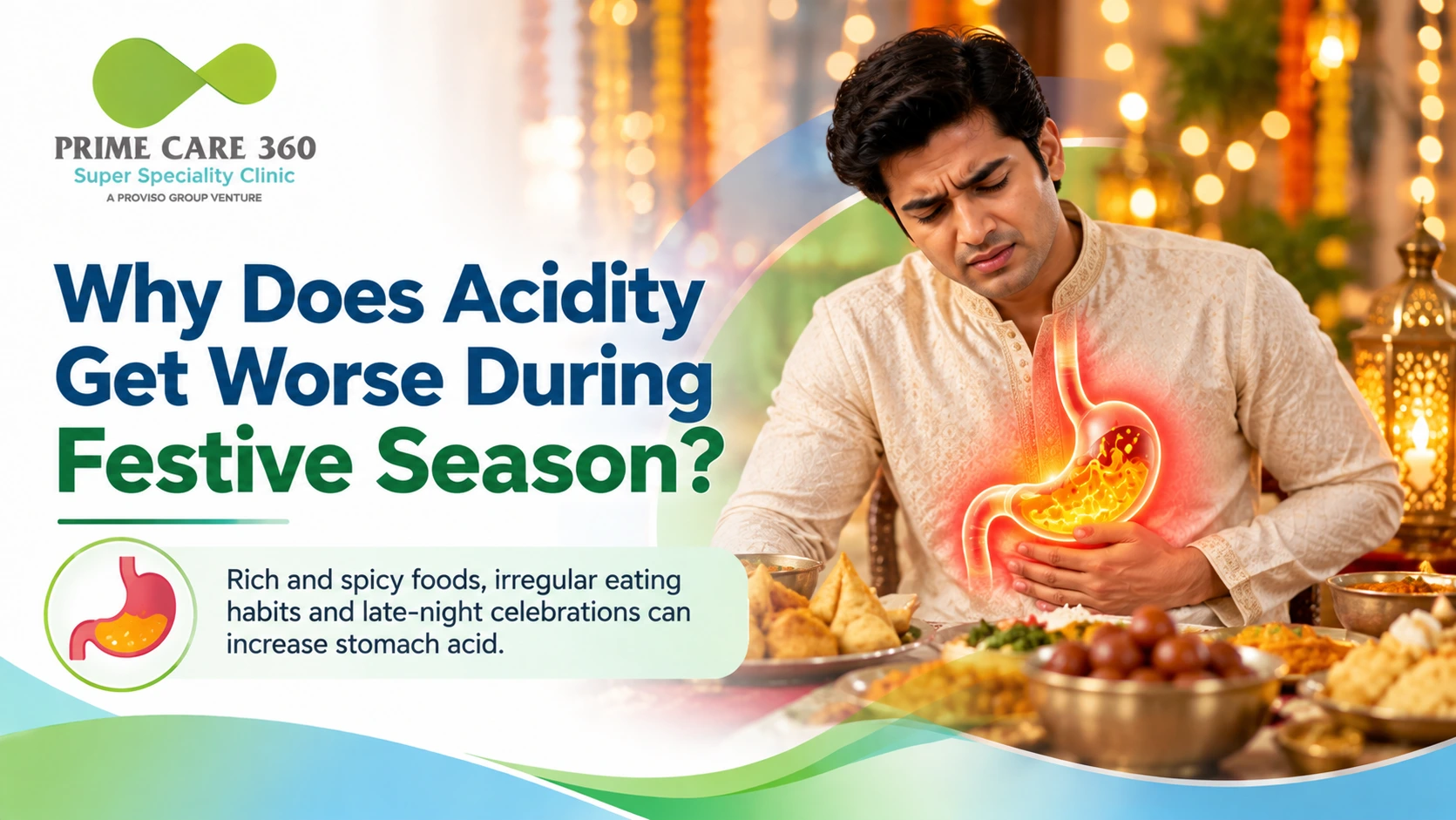
Festivals are a time for family gatherings, celebrations, sweets, and delicious meals. However, eating rich foods, enjoying late-night dinners, and changing daily routines can trigger acidity, heartburn, bloating, and indigestion. These symptoms may become more noticeable during Diwali, Navratri, weddings, and other festive occasions.
Why Does Acidity Get Worse During Festive Season? Causes, Foods and Prevention is an important topic for anyone who experiences digestive discomfort after festive meals. Acidity often occurs when stomach contents flow back into the food pipe, causing a burning sensation in the chest or throat. Understanding common food triggers and making a few simple lifestyle changes can help reduce discomfort without missing out on celebrations.
Festive eating habits are one of the main reasons acidity may worsen during celebrations. Large meals can increase pressure inside the stomach, making acid reflux more likely. Fried snacks, oily curries, rich gravies, and high-fat sweets may also trigger symptoms in some individuals.
Eating at irregular times, skipping meals before a party, and then eating heavily can contribute to digestive discomfort. Late-night dinners followed by lying down soon after eating may further increase acid reflux. Stress, inadequate sleep, and excessive consumption of caffeinated beverages can also aggravate symptoms in susceptible individuals.
Acidity does not affect everyone in the same way. Some people experience occasional heartburn, while others may have gastroesophageal reflux disease (GERD), a condition involving frequent or persistent acid reflux.
Certain festive foods may increase the likelihood of heartburn, especially when eaten in large quantities. Deep-fried snacks such as samosas, pakoras, and kachoris contain substantial fat, which can slow stomach emptying in some people and worsen reflux symptoms.
Spicy dishes, heavily seasoned curries, and foods containing chilli may irritate symptoms in sensitive individuals. Chocolate, mint, coffee, strong tea, and carbonated drinks can also trigger reflux in some people. Rich sweets and desserts may contribute to discomfort when they contain large amounts of fat or are eaten after an already heavy meal.
Acidic foods such as tomatoes and citrus fruits can worsen symptoms for certain individuals, but they do not need to be avoided by everyone. The best approach is to identify your personal triggers rather than eliminating entire food groups unnecessarily.
Traditional sweets such as gulab jamun, jalebi, laddoo, and barfi are often high in sugar or fat. Eating several sweets immediately after a large meal may leave you feeling overly full and can aggravate reflux symptoms. Enjoying smaller portions and avoiding excessive eating may help reduce discomfort.
Spicy and fried foods can trigger heartburn in some people, particularly when consumed in large portions. High-fat meals may delay stomach emptying, while chilli-containing foods can aggravate the burning sensation in susceptible individuals. Choosing smaller servings, less oily preparations, and milder alternatives may help.
Late-night eating can worsen acid reflux, particularly when you lie down soon after a meal. Gravity normally helps keep stomach contents from flowing back into the food pipe while you are upright. Eating dinner at least two to three hours before lying down can help reduce nighttime symptoms.
You can enjoy festive meals while taking steps to protect your digestive health. Start by eating moderate portions rather than filling your plate with several heavy dishes at once. Eat slowly and give your body time to register fullness. If you are attending a celebration, avoid skipping meals throughout the day, as this may lead to overeating later.
Choose grilled, steamed, or lightly cooked foods more often instead of relying entirely on deep-fried snacks. Drink water regularly and limit carbonated drinks if they trigger bloating or heartburn. Avoid excessive coffee and strong tea if you notice that they worsen your symptoms.
Try to maintain regular sleep timings and stay physically active with gentle walking. A short walk after eating may help you remain upright and support general digestive comfort. Avoid vigorous exercise immediately after a large meal, and do not lie down straight after dinner.
For occasional acidity, simple measures may help. Sit upright after meals, loosen tight clothing around the abdomen, and avoid foods or drinks that repeatedly trigger your symptoms. If nighttime reflux is a problem, raising the head of the bed may help reduce symptoms while sleeping.
Do not rely on baking soda, unverified herbal remedies, or excessive amounts of milk as regular acidity treatments. Some home remedies may cause side effects or worsen discomfort. Over-the-counter antacids may provide temporary relief for occasional heartburn, but follow the product instructions and seek advice from a qualified healthcare professional if you take other medicines or have existing health conditions.
If symptoms occur frequently, a healthcare professional may recommend further assessment and suitable treatment. Avoid starting long-term acid-suppressing medicines without appropriate medical guidance.
Occasional heartburn after a heavy festive meal may improve with lifestyle changes. However, frequent acidity, persistent nighttime symptoms, difficulty swallowing, repeated vomiting, unexplained weight loss, or signs of gastrointestinal bleeding require prompt medical assessment.
Chest pain should never automatically be assumed to be acidity. Seek emergency medical attention for new, severe, or persistent chest pain, especially if it spreads to the arm, jaw, or back or occurs with sweating, breathlessness, dizziness, or nausea. These symptoms may indicate a heart-related emergency.
Acidity can become more noticeable during the festive season because of large meals, rich sweets, spicy snacks, irregular eating schedules, and late-night dinners. Choosing smaller portions, identifying personal food triggers, staying upright after meals, and maintaining regular routines can help reduce symptoms. If acidity becomes frequent, severe, or persistent, seek medical assessment rather than relying only on home remedies.
Acidity may increase because of overeating, high-fat meals, spicy foods, irregular meal timings, and lying down soon after dinner. These habits can trigger or worsen acid reflux.
Limit foods that trigger your symptoms, which may include deep-fried snacks, rich sweets, spicy curries, chocolate, coffee, or carbonated drinks. Personal triggers vary, so complete avoidance of every food in these categories is not necessary.
Sit upright, avoid lying down for at least two to three hours after eating, and avoid further heavy meals. An antacid may help occasional heartburn when used according to its instructions.
Drinking water regularly supports hydration and may help clear acid from the food pipe temporarily. However, water does not cure persistent acid reflux, and drinking large quantities at once may increase stomach fullness.
Not always. Occasional heartburn can occur after a heavy meal, while GERD involves recurrent or persistent reflux. Frequent symptoms should be evaluated by a healthcare professional.
Seek medical advice if acidity occurs frequently, disrupts sleep, persists despite lifestyle changes, or is associated with difficulty swallowing, repeated vomiting, or unexplained weight loss. Severe or concerning chest pain requires urgent assessment.

with 40+ expert doctors

Consultation, Diagnostics & Pharmacy in one place

Easily accessible for seniors and children

with modern technology
Your health is our priority! Whether you need an expert consultation, diagnostic services, or pharmacy support, our team is here to assist you. Contact us today to book an appointment or get answers to your health-related queries.