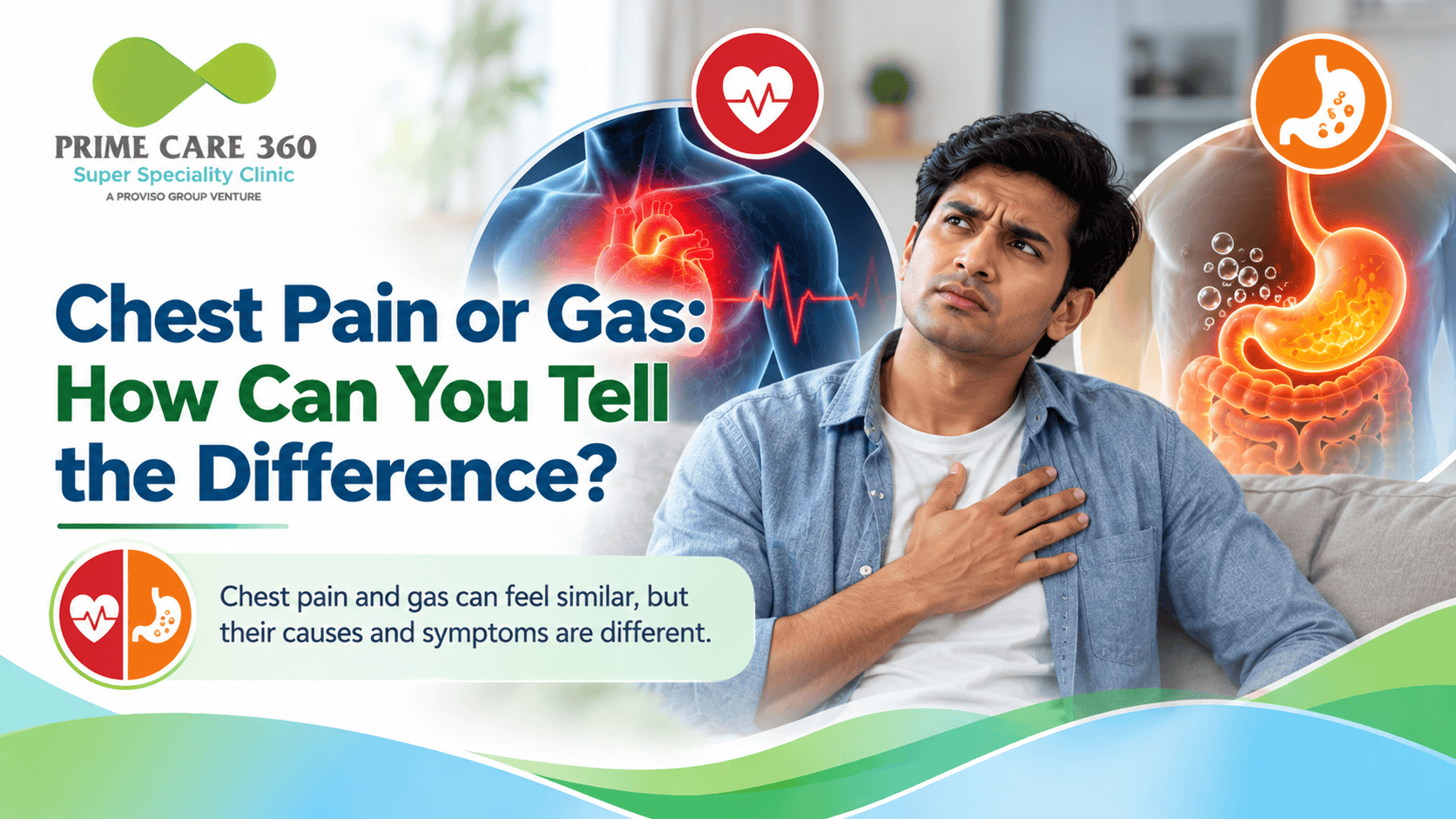
Chest discomfort can be worrying, especially when it occurs suddenly after a meal. Sometimes, trapped gas, bloating, or acidity causes pressure or burning in the chest. However, chest pain can also be a warning sign of a serious heart problem, including a heart attack. Since the symptoms may overlap, it is important not to assume that chest pain is caused by gas.
Chest Pain or Gas: How Can You Tell the Difference? The location, nature, and associated symptoms may offer clues, but they cannot reliably rule out a heart-related emergency. Recognising warning signs and seeking timely medical attention can help prevent serious complications.
Gas pain usually develops when gas builds up in the digestive system, causing bloating, pressure, or discomfort. It may occur after eating too quickly, consuming carbonated drinks, or eating foods that produce more gas. Acid reflux can also cause a burning sensation behind the breastbone when stomach contents flow back into the food pipe.
Heart-related chest pain may occur when the heart muscle does not receive enough oxygen-rich blood, such as during angina or a heart attack. Other possible causes of chest pain include muscle strain, lung infections, inflammation around the lungs, and certain digestive conditions.
Because these conditions can produce similar symptoms, the cause cannot always be identified from how the pain feels alone.
Gas-related discomfort may occur with a swollen abdomen, burping, passing gas, or a feeling of fullness after eating. The discomfort may change as gas moves through the digestive system. Some people also experience burning associated with acidity.
Heart-related chest pain may feel like pressure, squeezing, heaviness, tightness, or discomfort in the centre or left side of the chest. The pain may spread to the arms, shoulders, back, neck, or jaw. It can occur during physical activity or at rest and may be accompanied by breathlessness, sweating, nausea, or dizziness.
However, a heart attack does not always cause severe or typical chest pain. Some people experience mild discomfort, indigestion-like symptoms, unusual tiredness, or breathlessness. Women, older adults, and people with diabetes may experience less typical symptoms.
Important: Relief after burping, passing gas, resting, or taking an antacid does not reliably rule out a heart problem. If a heart attack is possible, seek emergency medical attention.
Gas pain may occur in the upper abdomen and sometimes feel like pressure or discomfort beneath the ribs or in the chest. It may be accompanied by bloating, belching, or abdominal fullness. These symptoms can suggest a digestive cause, but they do not confirm that the discomfort is harmless.
Heart-related pain often feels like pressure, squeezing, heaviness, or tightness rather than a brief, localised sensation. It may spread to other parts of the upper body and occur with sweating, nausea, or shortness of breath. Nevertheless, symptoms vary, and some people experience only mild discomfort.
Yes. Acid reflux can cause a burning sensation behind the breastbone, sometimes accompanied by a sour taste in the mouth or symptoms that worsen after eating or lying down. However, heart-related pain can also resemble heartburn. New, unexplained, severe, or persistent chest discomfort should not be attributed to acidity without appropriate medical assessment.
If chest pain is sudden, severe, persistent, or unexplained, seek emergency medical help. Do not wait to see whether burping, passing gas, or taking an acidity medicine makes it disappear. Call your local emergency number, such as 112 in India, and avoid driving yourself if a heart attack is suspected.
While waiting for emergency assistance, stop physical activity and rest in a comfortable position. Follow the emergency operator’s instructions. Do not take medication, including aspirin, unless advised by an emergency professional or healthcare professional who can assess its suitability.
If the discomfort is mild but recurring, arrange a medical assessment rather than repeatedly treating it as gas. A healthcare professional may review your symptoms and medical history, examine you, and recommend tests such as an electrocardiogram (ECG) or blood tests when a heart-related cause is suspected.
The risk of coronary heart disease increases with factors such as high blood pressure, high cholesterol, diabetes, smoking, increasing age, obesity, and a family history of early heart disease. Physical inactivity and certain existing medical conditions can also contribute to cardiovascular risk.
However, heart attacks can occur in people without known risk factors. Being young, physically active, or otherwise healthy does not automatically rule out a serious heart problem. New or concerning chest pain always deserves appropriate attention.
To reduce gas-related discomfort, eat slowly, avoid overeating, and limit carbonated drinks if they cause bloating. Notice whether particular foods repeatedly trigger symptoms, and adjust your diet accordingly. Regular physical activity and adequate hydration may also support digestive health.
If you experience acid reflux, avoid lying down for at least two to three hours after meals. Smaller meals may help, especially in the evening. Persistent indigestion, frequent heartburn, or recurring chest discomfort should be assessed by a healthcare professional rather than managed indefinitely with home remedies.
Gas, bloating, and acid reflux can cause chest discomfort, but heart-related pain may produce similar symptoms. Digestive symptoms such as burping and abdominal fullness may suggest gas, while pressure, pain spreading to the arm or jaw, sweating, and breathlessness can indicate a heart problem. These differences are not reliable enough to diagnose the cause at home. When chest pain is sudden, severe, persistent, or unexplained, seek emergency medical attention rather than assuming it is gas.
Gas may cause bloating, burping, and abdominal fullness, while heart-related pain may feel like pressure or tightness and occur with sweating or breathlessness. Symptoms overlap, so chest pain cannot be reliably diagnosed at home.
Yes, gas or digestive discomfort can sometimes be felt on the left side of the chest. However, left-sided chest pain can also have heart-related causes and should not automatically be attributed to gas.
A heart attack can sometimes feel like indigestion, heartburn, or pressure in the upper abdomen or chest. New or unexplained symptoms, particularly with sweating, nausea, or breathlessness, require urgent medical attention.
Burping may relieve discomfort caused by trapped gas. However, relief after burping does not rule out a heart problem, especially if the pain is new or accompanied by other warning signs.
Gas-related discomfort may improve as gas moves through the digestive system, but its duration varies. Do not use the duration of pain to rule out a heart problem or delay emergency care.
Seek emergency help for sudden, severe, persistent, or unexplained chest pain, especially if it spreads to the arm, jaw, back, or shoulder or occurs with sweating, breathlessness, nausea, or dizziness.

with 40+ expert doctors

Consultation, Diagnostics & Pharmacy in one place

Easily accessible for seniors and children

with modern technology
Your health is our priority! Whether you need an expert consultation, diagnostic services, or pharmacy support, our team is here to assist you. Contact us today to book an appointment or get answers to your health-related queries.